
The True Cost of Building Electrification: Balancing CapEx and OpEx When Moving Away from Gas Boilers
)
Hello to all our forward-thinking facility directors, real estate developers, and asset managers! If you are responsible for managing a commercial office tower, a multi-unit residential property, or an institutional building, you have likely found yourself in the middle of an important conversation. That conversation centres around building electrification—the process of reducing or replacing fossil-fuel-powered building systems with electrical alternatives such as commercial heat pumps.
Building performance standards, corporate sustainability commitments, municipal net-zero goals and changing energy technologies are encouraging more Ontario property teams to investigate low-carbon heating. The federal consumer fuel charge was set to zero effective April 1, 2025, so current electrification studies should not assume an escalating federal fuel charge on natural gas. Instead, they should model current utility tariffs, possible future policy changes, emissions targets and equipment lifecycle risks using clearly documented assumptions.
However, as a practical business leader, you cannot make massive infrastructure decisions based on trends alone. You need to understand the hard numbers. What is the true capital expense (CapEx) of removing a multi-million BTU gas boiler plant? What will your monthly operating expenses (OpEx) look like when your winter heating load shifts entirely onto the electrical grid? And how do you find the sweet spot where environmental stewardship aligns perfectly with financial responsibility?
Let’s take an honest, supportive, and deeply analytical look at the realities of building electrification so you can make the absolute best choice for your portfolio!
Part 1: The Mechanical Anatomy of Building Electrification
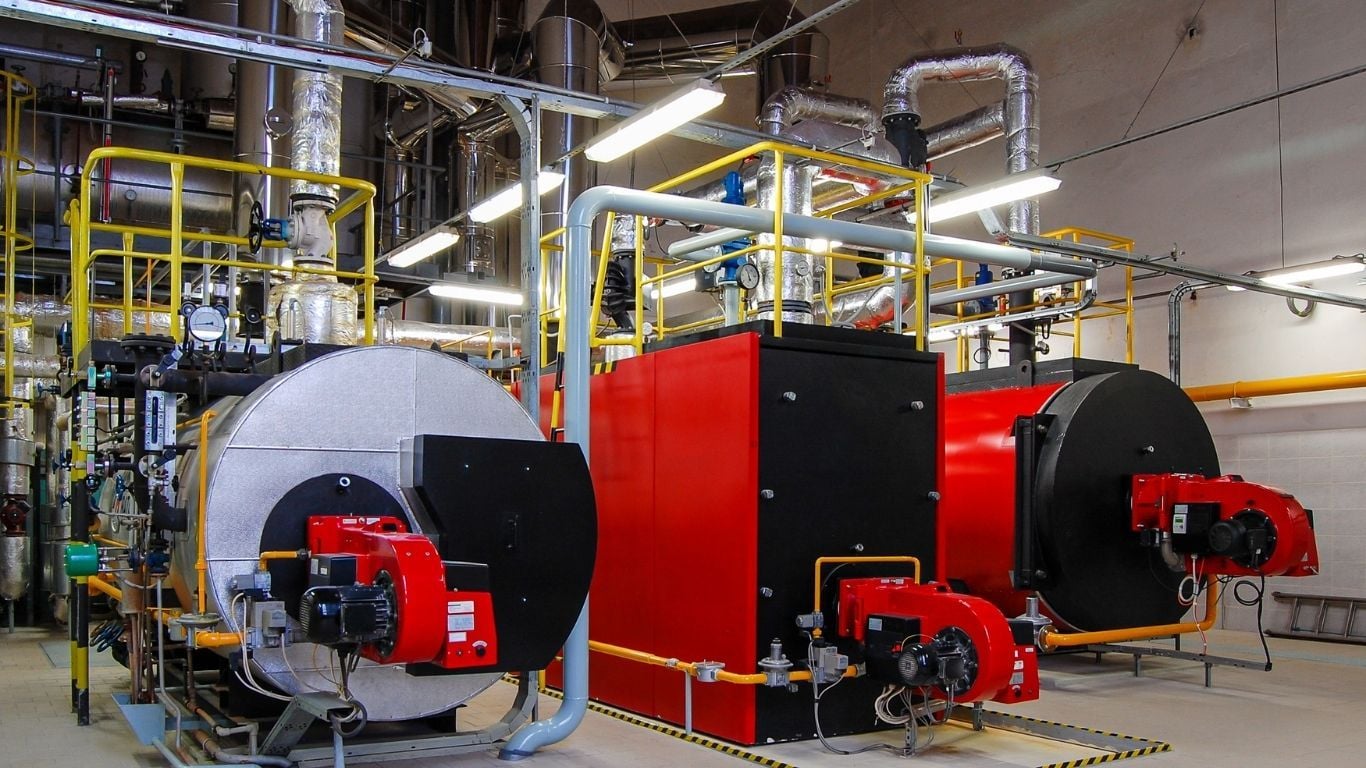
To understand the costs involved, we first need to look at the technology that makes building electrification possible. For decades, the gold standard for heating large buildings in Ontario has been hydronic heating powered by natural gas boilers. These systems are incredibly reliable; they burn gas to create hot water, which is then pumped through a network of pipes to radiation panels, induction units, or reheating coils throughout the building.
Electrification doesn't mean reverting to old-fashioned, inefficient electric baseboard heaters (which would cause your electricity bill to break records instantly). Instead, modern electrification relies on commercial heat pump technology.
Unlike a boiler, which creates heat by burning fuel, a heat pump moves heat from one place to another using a refrigeration cycle. Even during winter, thermal energy may be available from outdoor air, the ground or recoverable heat sources within the building. A heat pump uses a compressor and heat exchangers to transfer that energy into the building's air or hydronic loop. Because it moves heat rather than producing it through combustion, a heat pump can deliver more units of heat than the electrical energy it consumes. Actual performance varies with source temperature, required supply temperature, equipment selection, defrost operation, part-load conditions and overall system design.
Boiler and Heat Pump Operating Principles
Traditional boiler plant: Natural gas is burned to heat water for distribution throughout the building. Ambient Mechanical's commercial boiler services include system assessment, installation, repair and maintenance.
Commercial heat pump system: Heat is transferred from outdoor air, the ground or another recoverable source into the building through a refrigeration cycle. Performance depends on the temperatures and operating conditions the system must accommodate.
Part 2: Evaluating the Capital Expense (CapEx) Realities
Let’s talk frankly about the initial investment. Replacing a standard gas boiler plant with a full-scale commercial heat pump system is undeniably a major capital project. Understanding why those costs arise allows you to plan your budgets effectively.
1. Equipment Scale and Refrigerant Technology
Commercial heat pumps are highly sophisticated machines containing advanced variable-speed compressors, electronic expansion valves, and heavy-duty heat exchangers. Because they operate across wide temperature variances, the physical equipment is naturally more capital-intensive than a traditional gas boiler with a simple burner assembly.
Modern commercial heat pumps may use refrigerants such as R-32, R-454B, carbon dioxide (CO2 or R-744), propane (R-290), or other refrigerants selected for the equipment and application. Refrigerant safety classification, applicable codes, equipment location, leak detection, ventilation and technician training can all affect design and installation requirements. Low-ambient or high-temperature applications may also require specialized compressor arrangements or additional system components, increasing project complexity and cost.
2. Electrical Service Upgrades
This is often the most overlooked cost in a full building electrification project! A natural gas boiler requires very little electrical power—just enough to run its internal control panel, automated safety valves, and combustion blower fan. A commercial heat pump system, however, relies entirely on powerful electric compressors.
If your facility is currently sized to handle standard lighting, seasonal cooling and office plug loads, transitioning the winter heating load to electricity may require a substantial upgrade to the building's incoming electrical service. This could mean installing new transformers, switchgear, bus ducts or distribution panels. A detailed electrical study should also confirm whether the local utility has adequate upstream capacity and identify any interconnection work, timelines or charges. Ambient Mechanical's commercial electrical services can help coordinate electrical infrastructure with mechanical equipment and controls.
3. Building Retrofit Integration & Thermal Loop Matching
If your building was originally designed around low-efficiency legacy boilers that pump ultra-hot water (around 180°F to 200°F / 82°C to 93°C) through old perimeter radiators during peak winter design days, transitioning to a standard heat pump introduces an engineering gap. Standard commercial heat pumps excel at producing moderate water temperatures around 130°F to 140°F (54°C to 60°C).
Forcing lower fluid temperatures into a distribution network designed for high temperatures may prevent existing terminal units from meeting the required space-heating load during cold weather. Resolving this temperature and capacity mismatch may require one or more measures. A professional HVAC retrofit and system design should evaluate the complete building rather than selecting equipment in isolation:
Upgrading to specialized, premium high-temperature cascading heat pumps.
Replacing existing perimeter fin-tube radiators with larger, high-surface-area hydronic terminal units.
Investing in deep building envelope upgrades (such as high-performance triple-glazed windows and exterior continuous insulation) to reduce the building's overall peak thermal heat loss so that lower water temperatures become structurally sufficient.
Part 3: Analyzing the Operating Expense (OpEx) Equation
Once a new low-carbon system is operating, what happens to monthly utility bills? The answer depends on electricity and gas tariffs, demand charges, equipment efficiency, control sequences, maintenance requirements and the building's hourly heating profile.
In Ontario, electricity and natural gas are billed through different rate structures. A useful comparison must include the full marginal cost of each energy source, applicable delivery and demand charges, seasonal variations and the efficiency of the equipment converting purchased energy into useful heat. Comparing only headline commodity prices can produce a misleading result.
The Thermodynamics of the Coefficient of Performance (COP)
To evaluate the financial trade-off, we must look closely at the system's Coefficient of Performance (COP). COP is the ratio of useful heat output delivered by a heat pump to the electrical energy it consumes. An electric resistance heater has a COP of approximately 1.0. A gas boiler is normally compared using thermal efficiency rather than COP; its real seasonal efficiency may be lower than its rated peak efficiency because of cycling, return-water temperatures, standby losses and system conditions.
An air-source or ground-source commercial heat pump has a variable COP. Its performance must be evaluated at the outdoor or source temperatures and supply-water temperatures expected throughout the heating season, not only at a favourable rating point.
A Simple Efficiency Comparison
Electric resistance heating: Produces approximately one unit of heat for each unit of electricity consumed.
Condensing gas boiler: Converts most, but not all, of the fuel's energy into useful heat. Actual seasonal efficiency depends on system operation.
Commercial heat pump: Can deliver multiple units of heat for each unit of electricity consumed, but performance changes with operating conditions.
The Utility Spark Spread Calculation
To estimate the operating-cost crossover point, engineers may calculate a break-even COP using the building's applicable electricity cost, the equivalent natural gas cost and the boiler's seasonal efficiency.
In simple terms:
Break-even COP = electricity cost per kWh divided by natural gas cost per equivalent kWh, multiplied by boiler efficiency.
This should be treated as a starting point rather than a complete business case. A robust model should use interval data and current tariffs, account for demand charges and fixed costs, and calculate heat-pump performance across a range of outdoor temperatures and supply-water setpoints. It should also include maintenance, equipment degradation, future rate scenarios and any gas service costs that remain after electrification.
Energy Price and Policy Scenarios
The federal consumer fuel charge ceased to apply on April 1, 2025, although industrial carbon-pricing systems for large emitters continue. For most commercial-building lifecycle studies, it is therefore more accurate to test several electricity, natural gas and policy scenarios than to assume a mandatory annual increase in the former federal fuel charge.
A 15- or 25-year lifecycle cost analysis should clearly document escalation rates, discount rate, maintenance costs, equipment replacement cycles, residual value, incentives and the sensitivity of the results to future energy prices. This provides decision-makers with a realistic range of possible outcomes rather than a single guaranteed forecast.
Part 4: The Intelligent Compromise: The Hybrid Electrification Strategy
If the initial cost or infrastructure requirements of full building electrification are difficult to accommodate, an all-gas or all-electric choice may not be necessary. Hybrid electrification, sometimes called dual-fuel heating, can provide an interim or long-term option.
Instead of sizing the heat-pump plant to meet the entire heating load at the building's coldest design condition, a hybrid project may size it for a selected portion of the load. Existing or replacement boilers can then provide supplemental heat when demand exceeds the heat pump's capacity or when operating-cost logic calls for a changeover.
How a Hybrid Heating Plant Can Operate
Mild and moderate conditions: Heat pumps can serve some or all of the current heating demand when they can operate efficiently within their design limits.
Higher-load or colder conditions: Boilers can provide supplemental heat when the building load exceeds available heat-pump capacity.
Automated changeover: A properly programmed Building Automation System can stage equipment using outdoor temperature, load, equipment availability, energy prices and operating priorities.
The most appropriate changeover point is building-specific. It should be determined through hourly load analysis, equipment performance data, emissions factors, utility tariffs and electrical capacity—not by applying a universal outdoor-temperature rule.
A hybrid approach may reduce emissions and avoid or defer part of an electrical-service upgrade, but neither outcome is automatic. The achievable reduction depends on how much annual heating the heat pumps serve, Ontario grid emissions, boiler efficiency, control strategy and the remaining use of natural gas.
Part 5: Operational Risk Matrix
When managing the transition away from fossil-fuel heating plants, real estate operations teams must evaluate the project across several critical risk vectors:
Electrical Capacity and Utility Coordination
Confirm the building's spare electrical capacity, transformer and switchgear ratings, available fault current, emergency-power implications and the utility's upstream capacity. Utility reviews and equipment lead times can materially affect the project schedule.
Heating Performance and Occupant Comfort
Model hourly heating loads and confirm that selected equipment can meet required air or water temperatures under expected winter conditions. Include defrost behaviour, backup capacity, redundancy and recovery after outages or temperature setbacks.
Controls and System Integration
Define how heat pumps, boilers, pumps, valves, terminal units and metering will work together. Sequences should address staging, changeover, alarms, equipment rotation and failure modes. Commissioning and trend-data review are essential before the system is considered complete.
Refrigerant and Safety Requirements
Review current codes, standards and manufacturer requirements for the selected refrigerant. Equipment location, refrigerant charge, ventilation, leak detection, ignition-source control and service procedures may affect design decisions.
Financial and Procurement Risk
Test lifecycle results against different energy-price, maintenance and capital-cost scenarios. Include equipment lead times, installation phasing, temporary heating, tenant disruption, incentive pre-approval requirements and contingencies for unforeseen site conditions.
Operations Team Readiness
Provide training, documentation and clear operating procedures for building staff. A technically strong design can still underperform if operators cannot interpret alarms, adjust schedules or recognize when equipment is not following the intended sequence.
Planning an electrification project? Ambient Mechanical's energy and sustainability consulting, retrofit design, automation and electrical teams can help assess these risks as one coordinated building-system project.
Part 6: Funding Your Electrification Strategy
Funding programs, tax measures and eligibility rules can change, so they should be verified before a project budget depends on them. Applications may also require approval before equipment is purchased or installed.
Canada Infrastructure Bank Building Retrofits Initiative: The Building Retrofits Initiative supports financing intended to reduce investment barriers for energy-efficiency and building-decarbonization projects. Eligibility, project scale and financing structure must be confirmed directly with the program or participating financial partners.
Federal Clean Technology Investment Tax Credit: The refundable Clean Technology ITC may apply to qualifying new clean-technology property. CRA guidance identifies eligible categories that include air-source and ground-source heat pumps, subject to ownership, use, tax and technical requirements. Building owners should obtain professional tax advice before including a credit in project economics.
Save on Energy Retrofit Program: Ontario's Save on Energy Retrofit Program supports eligible electricity-saving upgrades through Prescriptive and Custom streams. Current program information indicates that incentives may cover up to 50% of eligible project costs, but project eligibility, incentive calculations and pre-approval requirements must be confirmed before work begins.
Utility and Local Programs: Additional utility, municipal or regional opportunities may be available depending on the building, location and measures proposed. Confirm current terms directly with the program administrator and verify whether fuel-switching, hybrid systems, studies or supporting electrical work are eligible.
The Ultimate Takeaway
Building electrification is not necessarily an all-or-nothing proposition. When approached with a data-driven engineering and financial strategy, it can modernize building infrastructure, reduce direct emissions and support organizational sustainability goals. The right scope may involve full electrification, a hybrid plant, heat recovery, envelope improvements, controls optimization or a phased combination of measures.
The best decision starts with measured load data, an assessment of the existing hydronic system, an electrical-capacity study and lifecycle modelling based on current tariffs. It should also account for comfort, redundancy, maintenance, refrigerant requirements, project phasing and staff training.
Ambient Mechanical brings HVAC, retrofit and design, electrical, building automation and energy consulting expertise together under one roof. Contact Ambient Mechanical to discuss an electrification feasibility assessment or a phased heating-plant strategy for your Ontario property.
| Tags:Electrical ServicesHVAC Maintenance & Service |
